

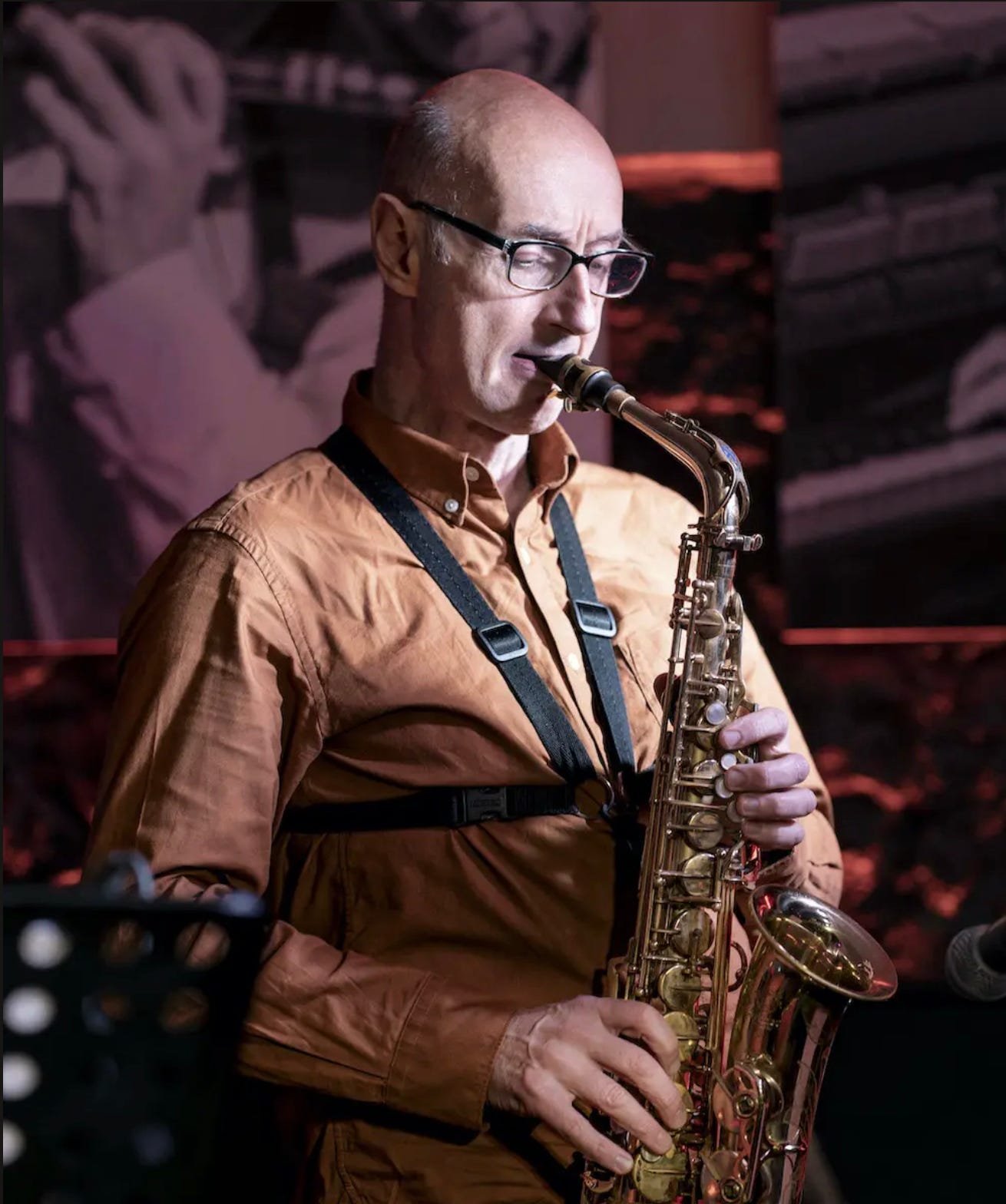
As I write in February 2026, Trinity Laban Conservatoire of Music and Dance (TL) and I have come to a legal agreement, and my case against them for employment discrimination and constructive dismissal has been dropped. It has been a very challenging two years — my life dramatically changed direction when I dared to question, or even expect a discussion about, TL’s BLM/Diversity action plan.
In February 2024, the principal Anthony Bowne (AB) sent an email to all staff and students promoting this plan and asking for feedback on his statement that there was “systemic inequality” in the institution and the music world. I felt I had some standing to comment. I’ve spent 35 years teaching in conservatoires including the Royal Academy of Music, Guildhall School of Music and Drama, Middlesex University, Birmingham Conservatoire and the Royal Welsh College of Music and Drama, as well as TL itself. I’ve performed in 30 countries and recorded more than 30 albums under my own name, along with featuring on many other artists’ recordings. I’ve been in the jazz scene for over 40 years.
I wrote an email response to the principal. I never heard back from him or anyone else.
My own experience is that there is no institutional discrimination against black musicians in jazz. In fact, the opposite is often the case, thanks to DEI — what used to be called positive discrimination. The Critical Race Theory that TL seemed to be promoting — that all white people are privileged and all black people are discriminated against — is divisive and untrue. This isn’t about whether racism exists. Of course it does, and not only against black people. But I do not see it “institutionalised” in the way the principal was suggesting, not on the TL jazz course I was involved with for 22 years, and not in the wider jazz scene.
I listed many black artists who have succeeded in the system — good luck to them, I don’t begrudge it, and several are my friends — but to suggest they are marginalised is simply not true. The principal was keen to announce that TL had achieved 50% “global majority” on its board of governors, but said this was not enough. A bizarre statement in a majority white country, and hardly representative of the UK population. If a principal in Nigeria suggested they should have 50% whites on a board, it would be laughed at.
I sent my response to the principal and copied in the head of jazz Hans Koller (HK) and the director of music Aleks Szram (AS). I also shared it with a third-year student with whom I regularly chatted about all kinds of things — music, philosophy, world events, health. Students had been asked for their feedback too, and I was hoping for an open discussion across the jazz course. I now realise I was naïve to think TL wanted any such thing.
This student read my email aloud to a handful of other students. One of them complained to the head of jazz. I don’t know exactly what was said, but I received an email stating that my classes were temporarily halted because a student was “anxious” about my email’s contents.
Rumours spread through the student body, and I was told they were all demanding to see it. TL then organised what I would describe as a secret meeting with all 95 jazz course students — without me or any other jazz staff present, and with no minutes taken — to discuss an email that only a handful of them had actually read. This was clearly an opportunity to exacerbate the situation rather than be the adults in the room. I only knew it was happening because a postgraduate student texted me from the meeting: “They are having a meeting about your email.”
The next day I was called in to meet HK and AS. Hans had been a friend of mine for 30 years. We had toured together, I was close with his family, we had recorded albums. But the ideology he had taken on was apparently above friendship, and his salary needed protecting. He insisted my email be sent out to students, as they were clamouring to see it. He said he would resign if it wasn’t released, and added: “I fear for your safety.” Not much protection of staff, then. Students — customers — rule.
There was strong emotional pressure in this meeting for me to release the email, and I had not slept much, so I was in a vulnerable state. I am also a very open person and don’t mind being wrong. I was still hoping for a genuine internal discussion — firstly with staff, then with student involvement. That was never going to happen. I agreed to the email being sent to all jazz students, with the background emails included: AB’s free speech statement and the BLM/Diversity email I was responding to.
This is an excerpt from AB’s 2022 email on free speech to all staff and students: “Trinity Laban provides a wide range of mediums where free and frank intellectual exchanges take place and the diverse views of individuals are tolerated, whilst also assuring the safety of students, staff and members of the public. It is of paramount importance that both respect and dignity are always afforded to colleagues and students alike and particularly where there may be differences in opinion, belief and views.”
TL’s actual approach reminded me of the Idi Amin line: “There is freedom of speech, but I cannot guarantee freedom after speech.”
Once the email went out, it was immediately posted on social media. A postgraduate student, Folakemi, created a change.org petition calling me racist and demanding my removal. A student I had supported and taught, and for whom I had, in my own time, found a guitarist for a gig she then went on to collaborate with. Interestingly, ex-students from ten years ago set up a counter-petition in my favour.
The social media storm began. Lies and attacks piled up online. Supporters who tried to push back were shut down. I went on sick leave for five months. The Free Speech Union (FSU) came to my defence and took on my case, hiring Doyle Clayton solicitors. Rosie Kay, the wonderful dancer and choreographer, also came to my rescue. She and Denise Fahmy — both of whom had been cancelled themselves — had set up Freedom in the Arts (FITA). The support from these three sources was invaluable and I can’t thank them enough.
TL then said they wanted me to come back and teach as normal in autumn 2024. All my classes and one-to-one lessons would be scheduled as usual.
So I went in to fulfil my contract — a 0.5 fractional post — and was met with a 100% boycott of my classes by the students. It was like running a gauntlet. Walking into the courtyard, I was ignored by students in their group huddles, eyes diverting away from me. Normally we would stop and chat. The hive mind was very clear to see. They had bonded in their tribe against me without thinking. It was a sad experience, watching the fear in them — the knowledge that if anybody stepped out of line, they would be cancelled themselves.
This went on for five weeks. Three days a week, I went in, was ignored, walked to my teaching rooms, and practised saxophone and composed music. No teaching. AS then said at half-term that this couldn’t continue as “the students are missing out on their education, so we need to give your classes to other teachers.” But because I was on contract, he had to offer me work. His suggestion: that I research a new Masters course in Jazz and Education online. I’m not sure how that would have filled a 0.5 post over the year — it would have taken me a few hours. It seemed a joke, and they knew I would refuse. It was not what I was employed for, not what was in my contract, and not what I had been doing for 23 years: teaching music in a practical, hands-on way.
So I resigned and took out the two legal cases mentioned at the beginning of this piece.
Meanwhile, the two other conservatoires I taught at — RAM and GSMD — fell into lockstep. Their students were too “anxious” to study with me as well, and the heads of department bowed to their customers’ wishes. Gigs were cancelled. A record label refused to release my latest recording. London Jazz Orchestra told me to step down from the band. Musicians would not perform publicly with me or even rehearse with me. Other bands would not play my music. A recording studio, Lightship 95, would not even take my money, as TL was a client of theirs. One musician told me: “I’m not playing with you now, but I’m not ruling it out in the future.” All of these people have to keep their fragile status in the jazz scene, and they feel that attacking me — or at least not being associated with me — is how they do it. No critical thinking involved. Everything I loved, all the teaching and gigs, has been taken away by mob rule.
But gigs are slowly coming back, even if conservatoire teaching is gone for good. These places are now captured ideologically, with the religion of “diversity” and the imperative to please the students above all else, including music. As Martin Luther King said: “Injustice anywhere is a threat to justice everywhere.”
There are good things happening. I have had wonderful support from many new friends. I am rehearsing lots of new music with like-minded people, and Rosie Kay and I are collaborating on a very exciting project — The Dinner Party: Uncancelled — for which I have composed the music. Onwards and upwards. None of these two years needed to happen. But maybe they were meant to.
Martin Speake
(My email response to the ‘systemic inequality’ suggested by TL can be found easily online. Students decided to post it on social media. Here it is)
 | A guest post by
|
Wow wow wow. This stuff is unbelievable. But, good on him and Rosie Kay and Glinner and everybody who perseveres.
Myself I have so few old friends and former confederates left it's like I've lived through 1918 or something--- except instead of being dead all the ghosts refuse to talk to me.
It’s unfortunate it didn’t come to debate, because what was said is so obviously true that any opposition falls apart - Jazz is an American art form widely recognized to have originated in Black communities, post-reconstruction, and the most important principals in the genre… are black.