
The video that 'radicalised' me

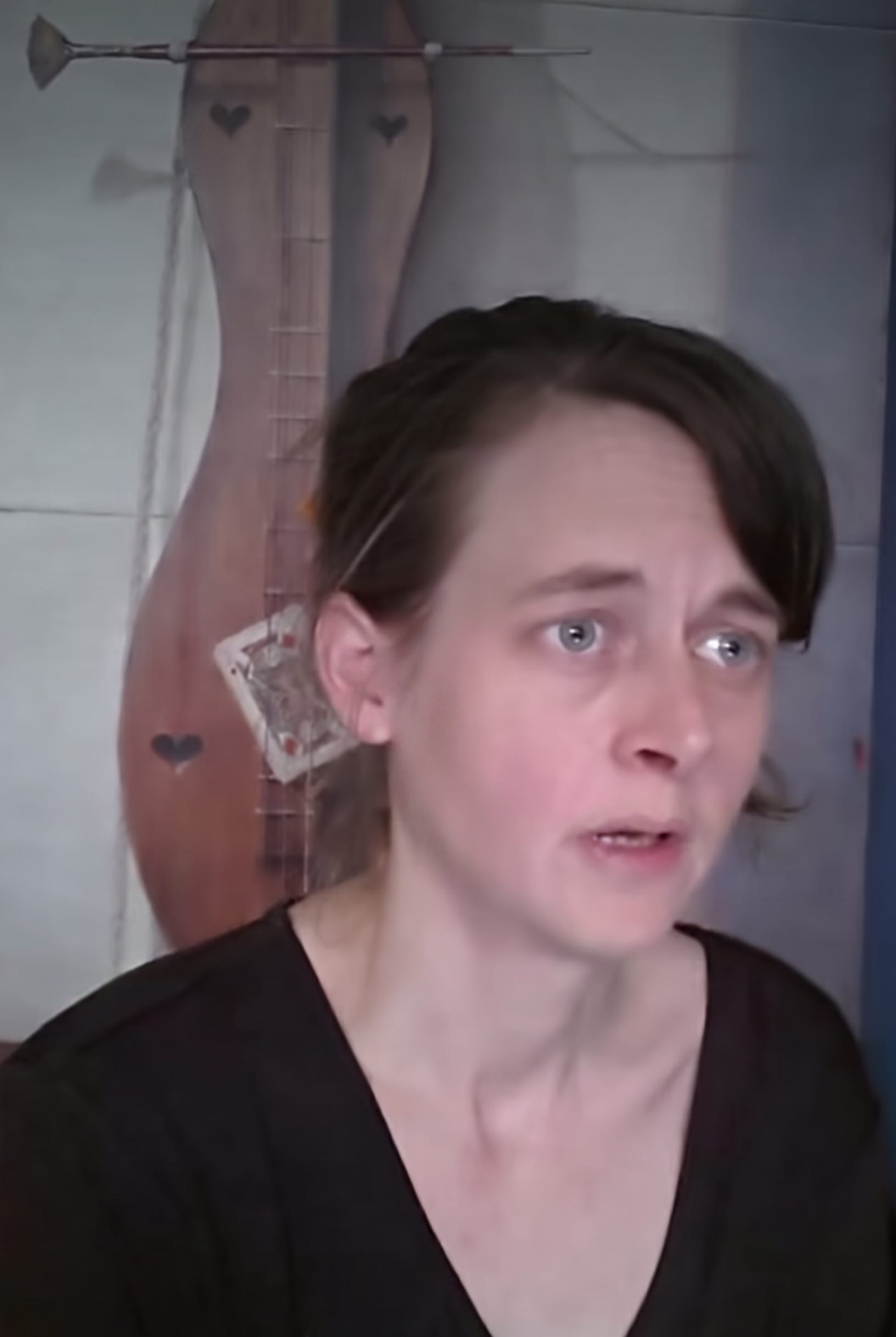
“Who radicalised you?” is something we TERFs and TERF allies hear a lot. The question takes for granted that the radicalised parties are us, and not the people who believe men can become women by saying so, that children are born in the wrong body, and that men belong in women’s changing rooms, shelters and sports.
Still, I’ll take the question on its own terms. I’m not sure I can safely say any one person was responsible. The one who looms largest is Magdalen Berns. Her wit, her pugnacious energy, her empathy, her sorrow at lesbians losing their spaces. I had the honour of meeting her in the last few weeks of her life, and that’s probably part of why she’s stayed so vivid.
Others shaped me and went quietly back to their own lives, and the fight has been hectic enough that I haven’t stopped to give them their due. A social worker called Lisa Muggeridge is one of those people. I’m only realising now, going back through it, how much of what I think and how I think came from a single video of hers.
This was 2018. Jess Bradley, the NUS’s first trans officer, had just been suspended for sharing workplace dick pics while Aimee Challenor, it would shortly emerge, shared a nappy fetish with his paedophile father. I knew there was something terribly wrong with this so-called civil rights movement and I wanted to understand what.
Lisa was an early voice who didn’t generate much chatter at the time. She vanished from the fight not long after. I assume she went quiet to protect her family, who were already being targeted by trans activists. I don’t blame her, and I’ll always be grateful that she gave me what I needed. A lens, like the shades that opened Rowdy Roddy Piper’s third eye in John Carpenter’s They Live. The lens was the word “grooming”.
The short video opens with a memory from her first week of social work training. The lecturer told a room of seventy students to look around. Two or three of their fellow students, he said, were there to gain access to vulnerable children. He wasn’t speculating. He was showing them what they were up against. Every workplace those students entered for the rest of their careers would contain the same percentage, and the predators, the lecturer warned them, would be the most charming, the most popular, the most successful in the room.
I immediately realised it was true. Obvious, even. The Catholic Church didn’t attract paedophiles because Catholics are evil people. Quite the opposite. Catholics were trusting and open, and they hadn’t been given the speech that Lisa was given.
It takes a village to enable a predator, and when Lisa made her video many of the UK’s institutions had already been captured by the fashionable virus that allowed men into women’s spaces. The police, the prison service, the civil service, the education system, and most horrifically of all social work itself had fallen. Frontline safeguarding professionals like Lisa know what predators look like. Elite institutions don’t, and they own the keys to the kingdom. The least plausible of them swanned past every door, because every door had already been propped open. The visibly autistic Aimee Challenor wasn’t charming by any measure, but Oxford gave him a speaking gig, the Mayor of London removed “ladies and gentlemen” from tube announcements on his orders, and the Guardian (among other left-wing news titles) greased his entry into polite society.
This is what I want people who use the word “radicalised” about me to understand. We weren’t radicalised. We were the people who hadn’t been groomed. Lisa Muggeridge handed me the glasses and I put them on, and I’m sorry it’s taken me this long to thank her properly.
“So I wanted to talk about a conversation that was had with my group in our first week of social work training. We had registered at university. We had started. We were all very, very eager to learn.
There was a lecture, I think it’s actually the core module, the actual social work theory lecture, where a very middle class woman …the lecturer had mentioned the word “normal”, and she thought she was being a smart arse, this one, and she said, “What’s normal anyway?” The lecturer fixed her with a look and said, “Your job from now on is to have a very, very, very clear grasp of what is normal and what is abnormal and what is within the range of normal, because you are going to be making decisions on that basis. And if you do not have that ability, you are on the wrong course.”
She was put in her place.
In the same lecture, we were told to look around the room. There were many of us. I have in my head that there were 70 students that year, but I might be wrong. I could be very wrong, it was some time ago.
We were told to look around the room and understand that at least one person, possibly two, possibly three, in that room were there to train as social workers with the sole aim of getting access to vulnerable children.
We were told to understand that in every office, in every environment we ever worked in, we were working with the most vulnerable children in the country, and that the only way we could mitigate the harm the system did was if we recognised that a percentage of our colleagues, colleagues we trusted, colleagues we liked, colleagues who were successful, around us, were there to get access to vulnerable children.
And that we must assume in every environment, in every institution, that this is the case. Those people may be the most popular, the nicest, the most charming. In fact they’re highly likely to be the most popular, the nicest, the most charming. They are highly likely to be the person who spends a great deal of time projecting an image of themselves as good and working with vulnerable children. And we knew this to be true.
This is the basis of all safeguarding in the UK. The reason we know this is because before my generation had looked after children, it was the norm that children were never, ever, ever believed. My generation (was) the first generation where we said they will be listened to. That this is the rule of law, and that rule of law is there to protect you. We recognise that within that protection, we do not have that ability often. So we (must) recognise that people will do this. This is not unknown. This is not even remotely contested. This is at the core of safeguarding, the core of health, the core of education.
The place where they do not know this is elite institutions.
The Guardian do not know this. I want you to watch the Guardian and every narrative they pull about this, because even if it turns out tomorrow that children have already been harmed by this ideology, and it already is clear that many children have been harmed by this ideology,
The Guardian will protect identity, and they will unleash abuse on anybody who threatens that identity. I want you to watch how they do that. Go back to that video in the playlist about protection of identity and how it generates crisis. Watch that process with the institutions who have pushed this, as it becomes apparent how much harm it has caused.
It is abundantly clear that the campaign around Roz Kaveney, Jess Bradley, Aimee Challenor and others was a direct and concerted attempt to undermine equality frameworks, to dilute and undermine safeguarding. It was directly about getting access to children for many of the people with this. We know this predatory behaviour occours. It’s not a race issue. It’s not a class issue. The occurrence is roughly universal. This is the baseline. There will always be a streak of extremely predatory people who are motivated by paraphilia, which is not a normal sexuality, not a normal sexual desire, but one driven by compulsion and often causing harm to others.
We know that this is the case. Everybody on the ground knows this. What has become apparent through the use of the word “TERF” and the promotion of this ideology is that institutions are not aware of this. We do not expose children to risk because elite institutions are not aware of the systems they are the political voice for.
I wanted to share with you that actually we do know and we do understand this, and I wanted to share with you how distinctive it was that those elite institutions do not.
That's an excellent video, and thanks for sharing it. I would bet that, even on Terf Island, a lot has changed since 2018 in social worker training. The ideology of the elite institutions has surely flowed down to them. I know that, in America, parents have good reason to fear that social workers will take their kids away if they're not "affirming." Sometimes those stolen children are then given to groomers (see the story of Sage Blair).
What Muggeridge says in this video is simultaneously vital and depressing, because people have been required to erect ideological blinders that prevent us from seeing or calling out the groomers in our midst as long as those groomers say they're gender something or lgbtwhatever. The plain old truth she talks about - that social workers need to have a clear sense of what is normal and that is not - is no longer permitted expression not just in elite institutions but across the board in schools, workplaces, hospitals.
Some kids will escape, but the people who created this abomination will never face justice.
I was radicalised by woke folk and what they enabled. I couldn't believe that identity was more important than physical reality—or that people I knew would demonise me first for asking questions, then for speaking out against the appalling abuses against women and girls.
We are not support animals or validation machines, we are human persons with demands, needs, and rights specific to our sex. I will die on that hill. What annoys me is that there are people who want to make sure I do—at least on the social level.