
Ireland next
The men who destroyed women's rights in my home country

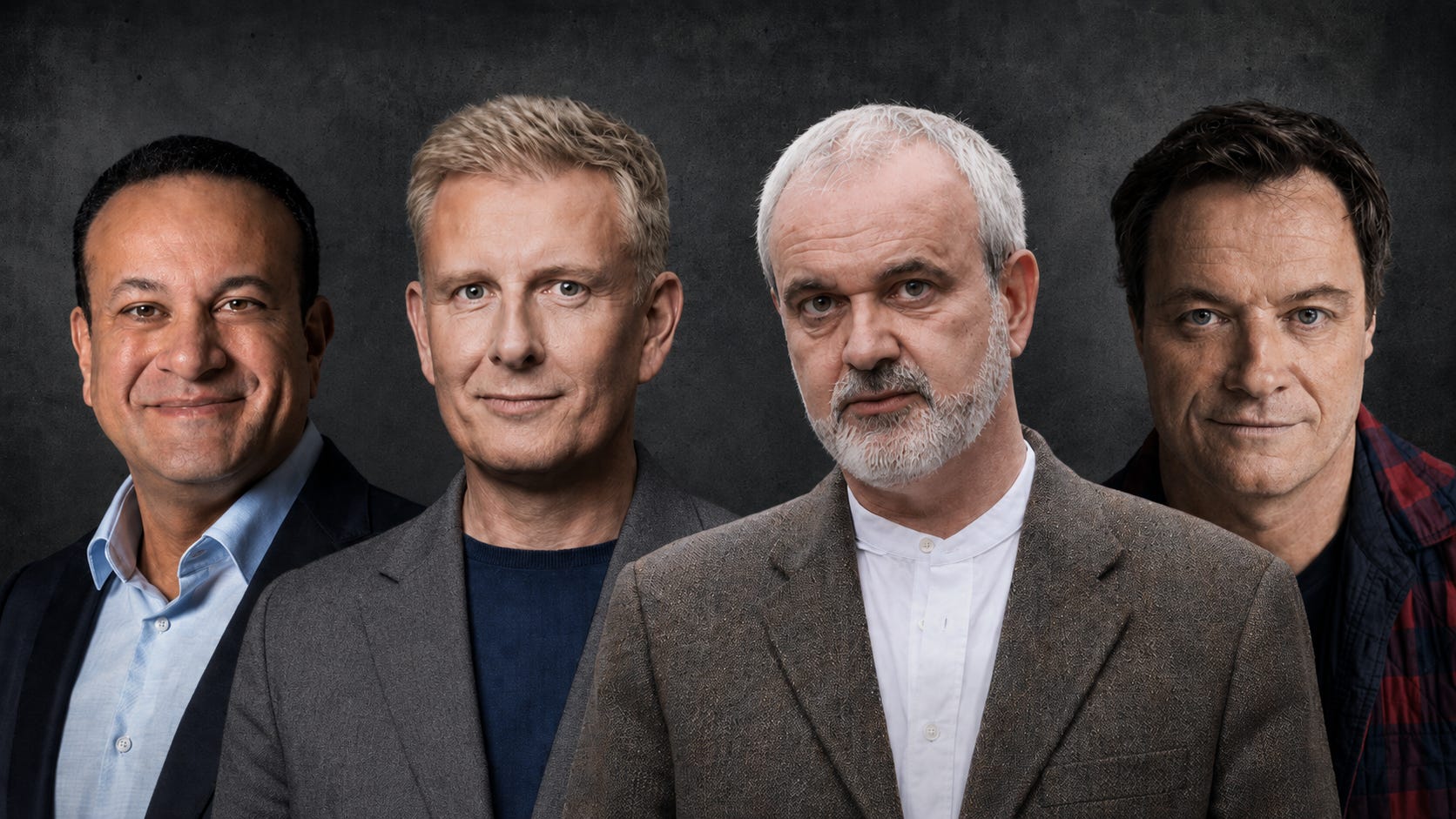
In October 2015, my ex-wife and I were campaigning for abortion reform in Ireland. The man driving us up the east coast from Dublin to Belfast was Colm O’Gorman. Sound man, brave man, I thought. Founder of One in Four and, of course, the face of Amnesty International in Ireland. I liked him enormously and considered him a friend.
But it was my wife who suffered the tragedy that put us in that man’s car. Her first pregnancy after we had begun to try had been diagnosed with a fatal foetal abnormality. Had she been in Ireland rather than London, the law would have forced her to carry the baby to term. She and I did a short film about it that went out under the Amnesty banner, and we were proud to be useful to a brand we considered one of unassailable goodness, much as my grandparents and parents once thought of the priesthood.
The next time I saw Colm O’Gorman, it was three years later. He was outside an RTÉ studio with a placard, protesting a five-minute interview I had given on the matter of women’s rights, which he had now decided he was against. By now, my marriage was failing, so I had no time to admire the elegance of his method. Pre-cancellation, he had used my wife and me to burnish Amnesty’s feminist credentials. Post-cancellation, he used my notoriety to help destroy women’s rights in Ireland.
The institution he served has run Ireland’s gender politics ever since. Amnesty Ireland did not merely consent to self-ID. It led the charge. It campaigned for the Gender Recognition Act of 2015, briefed politicians, told journalists what to think, and when the law passed it celebrated. The organisation that had once put my wife’s grief on a poster now used its authority to ensure that no Irish woman would be permitted to object to a male in her ward, her cell, or her refuge. What we gave Amnesty was the down payment on a betrayal.
But Britain has just done something Ireland will not. On Thursday, more than a year after the UK Supreme Court ruled unanimously that “woman” in the Equality Act means biological woman, the Equalities Minister Bridget Phillipson finally laid the updated EHRC code of practice before Parliament. After a decade of being smeared, sacked, doxxed, arrested and dragged through the courts, women in Britain have a piece of paper that tells hospitals, schools, gyms and refuges what the law actually says. Single-sex means single-sex. A man with a certificate is still a man.
Terf Island held the line.
But this is a global war, and Britain is just one front. While we toast at home, women in other countries are still being sued, sacked, fined, deplatformed and prosecuted by their own states for the crime of saying men are men.
In Australia, the Federal Court has just told Sall Grover that her women’s app, Giggle, was obliged to admit a male who identifies into being a woman. Last week, on appeal, the court doubled her damages to twenty thousand dollars for the offence of running the app she built. In the same country, Kirralie Smith of Binary Australia has been ordered to pay $95,000 to two trans-identifying males whose names and faces she shared online while raising concerns about males playing women’s football in New South Wales. The penalty was handed down in December. She must also pin a public apology to them on every social media account she owns, for as long as she owns them.
In France, the journalist Dora Moutot was convicted on Wednesday and fined €4,500 for “public insult on account of gender identity.” Her crime was saying, on a late-night talk show in 2022, that women have reason to be wary of “people with penises.” She had been careful. In an effort to be polite she had used the phrase “people with penises”. The court ruled that by referring to people with penises as people with penises, she had reduced trans women to “their male attribute.” Her co-author Marguerite Stern, with whom she wrote the book Transmania, faces the same complaints from the same lawyers. The two of them have been driven from public events by mobs chanting “a TERF, a bullet, social justice.” Explosives were found near one of their signings. In 2026, in the country of Olympe de Gouges, a woman can be fined four and a half thousand euros for stating what every human being on earth knows.
In Canada, the nurse Amy Hamm has been in front of a professional tribunal for five years because in 2020 she chipped in for a Vancouver billboard that read “I ♥ J.K. Rowling.” The billboard lasted thirty hours before activists got it taken down. The BC College of Nurses and Midwives compiled a 332-page report on her tweets, articles and podcast appearances, found her guilty of unprofessional conduct in March of last year, suspended her nursing licence, and ordered her to pay nearly $94,000 in costs. Her employer fired her without severance. Robert Hoogland, also in British Columbia, was jailed in 2021 for contempt of court because he kept calling his teenage daughter his daughter, in interviews, in violation of an order requiring him to use male pronouns for her. A court had previously found that his use of the word “daughter” constituted “family violence.” He served months.
Countries went mad in a herd. They go sane one at a time. Britain is sane today, more or less. Australia, France and Canada are not. And then there’s Ireland.
Ireland has self-ID. Has had it since 2015, when the Gender Recognition Act was waved through with all the seriousness of a Father Ted raffle. Under that law, a man can sign a form and become a woman “for all purposes.” Including, it turns out, the purpose of being locked in a cell with frightened female prisoners.
Barbie Kardashian. Born Gabriel Alejandro Gentile. Fifteen previous convictions for violent crime. Told his social workers he wanted to torture his mother to death and prolong her suffering with boiling water and a screwdriver. Described the screams of a social worker whose eyelid he had ripped off as “music to my ears.” Signed his form. Got his certificate. The Irish state put him in Limerick women’s prison, When in prison, he picked up charges of threatening to kill and rape a female prison officer and a female inmate. He was acquitted but he admitted, at his trial, that he had made those threats. He’s out now. Two-year supervision order. Two years in which he can follow any Irish woman into a female-only space and only start breaking the law when he decides to kill her.
Nobody could say they weren’t warned. The people who designed the system simply chose not to imagine what it would look like once it was running.
And every Irish journalist who could have stopped it looked the other way. Start with Paddy Kielty, because he had the biggest platform and used it for nothing. He sits in Gay Byrne’s old chair, and, whatever else you might think of him, Byrne would have put a woman on the couch and let her talk. For all his biases, he had turned a light entertainment slot into a national forum, where morality, politics and religion got argued out in front of the country. He ambushed bishops on live television. In 1987, in the middle of the AIDS crisis, he held a condom up to the camera on RTÉ, called it “the dreaded object,” and showed the country how to use one. He understood that a chat show host’s job is sometimes to ask the question no one else will ask, with a polite smile and a tape recorder running. Kielty inherited that chair and that microphone and that audience, and on the most consequential women’s rights story of his lifetime, he has done nothing. Not a segment. Not an interview. Not a question. He has aped the rest of the Irish media establishment, which long ago decided that women complaining about men in their changing rooms was a story to be managed, not reported.
Then there’s Rory O’Neill, who performs as Panti Bliss. Ireland’s beloved drag queen and secular saint, who in 2014 gave a speech from the Abbey Theatre stage about Irish homophobia that was filmed, posted online, and turned into a viral video the country’s liberal class adopted as scripture. Most of what he said that night about homophobia was true and brave. The problem is what O’Neill did with his sudden surplus of cultural capital. Over the next few years, he spent it on destroying women’s sex-based rights in Ireland while calling it a continuation of his fight against homophobia. To question any of it was to declare oneself the sort of brute who would have booed him at the Abbey. That was the trick. It worked beautifully. It is still working.
And above them all, Leo Varadkar. The first openly gay Taoiseach. The man who, in office, called for a “respectful debate” about trans issues while ensuring that no such debate could be permitted to happen. Last October, marking the tenth anniversary of the Gender Recognition Act, Varadkar wrote in the Sunday Times that the law had been “a success” and had helped promote the idea that gender is a social construct. Anyone raising the alarm, he wrote, was a “nationalist and religious fundamentalist actor” busy “demonising and scapegoating” the vulnerable. That’s me, by the way. That’s the women in Limerick prison. That’s the parents helping their child through this violent new form of anorexia, glamourised by celebrities like Ellen Page. We are all religious fundamentalists now, according to the first gay Taoiseach, who has ensured that when the cost is counted, he may also be the last.
Varadkar has since moved on. He is a Senior Fellow at the Harvard Kennedy School, running a project called “The Future of LGBTQI+ Rights in the European Union.” From there, on full salary, he exports Ireland’s experiment to the rest of the bloc and writes op-eds about how well it’s all going. At the time of this writing, Harvard has not sought out the women of Limerick prison for their thoughts.
Which brings us back to Colm O’Gorman, the man at the wheel. In 1999 he founded One in Four, the Irish charity that supports adult survivors of childhood sexual abuse. He had been abused himself, by a priest called Sean Fortune, and he had the courage to say so on television at a time when Irish institutions still preferred their victims silent. He took on the Catholic Church and won. The Ferns Inquiry happened because of him. Children are safer in Ireland because of him.
That’s what makes the rest of it unbearable. The same man, having built a career on the principle that vulnerable people must not be silenced by the institutions meant to protect them, went on to run the Irish arm of Amnesty International while it lobbied for an ideology that did precisely that.
First, by ushering men into women’s wards, women’s prisons, women’s locker rooms. Second, by sending confused children, disproportionately girls, gay kids and the autistic, to clinics that medicated and operated on them in the name of an identity they’d announced in front of the wrong adult. Amnesty Ireland treated both as settled human rights, and treated anyone who objected as a bigot.
The cost has been particular for lesbians. A young woman who once would have come out and found a community now finds an ideology waiting that tells her she might really be a boy, and a dating scene in which declining male-bodied partners is treated as transphobia. Irish lesbians lost their bars and most of their younger generation in one go.
I’m writing all this as someone who’s spent the last decade being told by Irish friends, Irish colleagues, Irish acquaintances and Irish strangers that I had lost my mind. That I was punching down. That I needed help. None of them have apologised. That’s fine. An apology from people who said nothing as my world caved in isn’t worth having. I just need to know my sister and mum are safe, and my daughter when she visits them. I once worked with Colm O’Gorman because I thought we were making Ireland safer for women. Now I’ll never stop fighting men like him for the same reason.
Ireland is on the same road as France. The hate speech provisions were beaten back in 2024, but the hate crime law passed, and the Minister has promised the speech ban will be back. The Gender Recognition Act is still in force. The HSE is drawing up a new ‘model of care’ for gender services in consultation with TENI. Irish children are still being referred to clinics in the UK. The schools still teach the gospel according to TENI. The journalists still won’t ask the right questions. And the women, as ever, are expected to shut up, use the cubicle marked ‘all genders,’ and hope for the best.
Irish feminists already know the assignment, but we need the men who know something is wrong but are keeping their mouths shut for a quiet life. We need the journalists who went along with it, and have begun in the small hours to wonder. We need the parents who watched their daughter come home from school talking about being a boy and felt the floor go. You are not bigots for asking questions. You are the country, and you are the tide that needs to turn. Don’t wait for your friends. Your friends aren’t coming. Nail your courage to the mast.
Repeal the Gender Recognition Act. Get men out of women’s shelters, changing rooms, toilets and sports. Put every last male prisoner back in a male prison where he belongs. Get the ideology out of the schools. Tell the HSE the experiment is over. Tell RTÉ to do its job. Tell Amnesty Ireland that the women in Limerick prison are prisoners of conscience now, and Amnesty put them there.
You’ll be smeared. You’ll be sacked. You’ll be charged. We’ve all been through it. It passes. The truth does what the truth does, which is wait everyone out.
Because of the feminist resistance in the UK, Terf Island is now safer for women.
Ireland next.
Deleted a bit about my birthday, celebrating, and thanking all the women who came before because it was making the piece too long and it very quickly went out of date.
A few thoughts occur to me.
First, that Ireland is, like Australia, being considered as a petri dish experiment for the increasingly strident trans programme.
Second, that the switch from gay rights to trans rights recalls the famous scene in Orwell’s 1984 in which a screaming hate speech has its target switched mid-way through and no-one even notices the change:
“There was, of course, no admission that any change had taken place. Merely it became known, with extreme suddenness and everywhere at once, that Eastasia and not Eurasia was the enemy.”
Third, and once again with reference to 1984, the whole trans issue recalls the famous scene in which Winston Smith is shown four fingers and ordered to see five. We are shown men and ordered to see women.